Acid Reflux in Dogs: Common Causes
If your dog frequently gulps, licks their lips, vomits yellow bile, or throws up after eating, it can be frustrating and concerning.
Many pet parents immediately assume it’s simply a sensitive stomach.
But ongoing acid reflux in dogs is often connected to deeper digestive stress.
What Acid Reflux in Dogs Can Look Like
Dogs don’t always show acid reflux the same way humans do.
Instead, you may notice:
vomiting after meals
yellow bile vomiting
excessive gulping
lip licking
swallowing repeatedly
burping
eating grass frequently
discomfort after eating
restlessness at night
Some dogs only show mild symptoms at first, while others struggle more regularly.
Why Dogs May Develop Digestive Stress
Digestion is a complicated process involving:
stomach acid
digestive enzymes
bile production
pancreas function
gut bacteria
nutrient absorption
When one part of that process becomes strained, the entire digestive tract can feel the effects.
Senior dogs are especially vulnerable because enzyme production often decreases naturally with age.
Dogs eating heavily processed diets may also place more stress on the digestive system over time.
The Pancreas Plays a Bigger Role Than Most People Realize
The pancreas helps produce digestive enzymes needed to break down fats, proteins, and carbohydrates.
If enzyme production becomes inefficient, food may not digest properly.
This can contribute to:
vomiting after eating
bloating
gas
digestive discomfort
poor nutrient absorption
reflux symptoms
Some dogs may also struggle digesting fats or proteins efficiently.
Why Digestive Enzymes Matter
Digestive enzymes help the body break food down into usable nutrients.
Without enough digestive support, meals can become harder on the stomach and digestive organs.
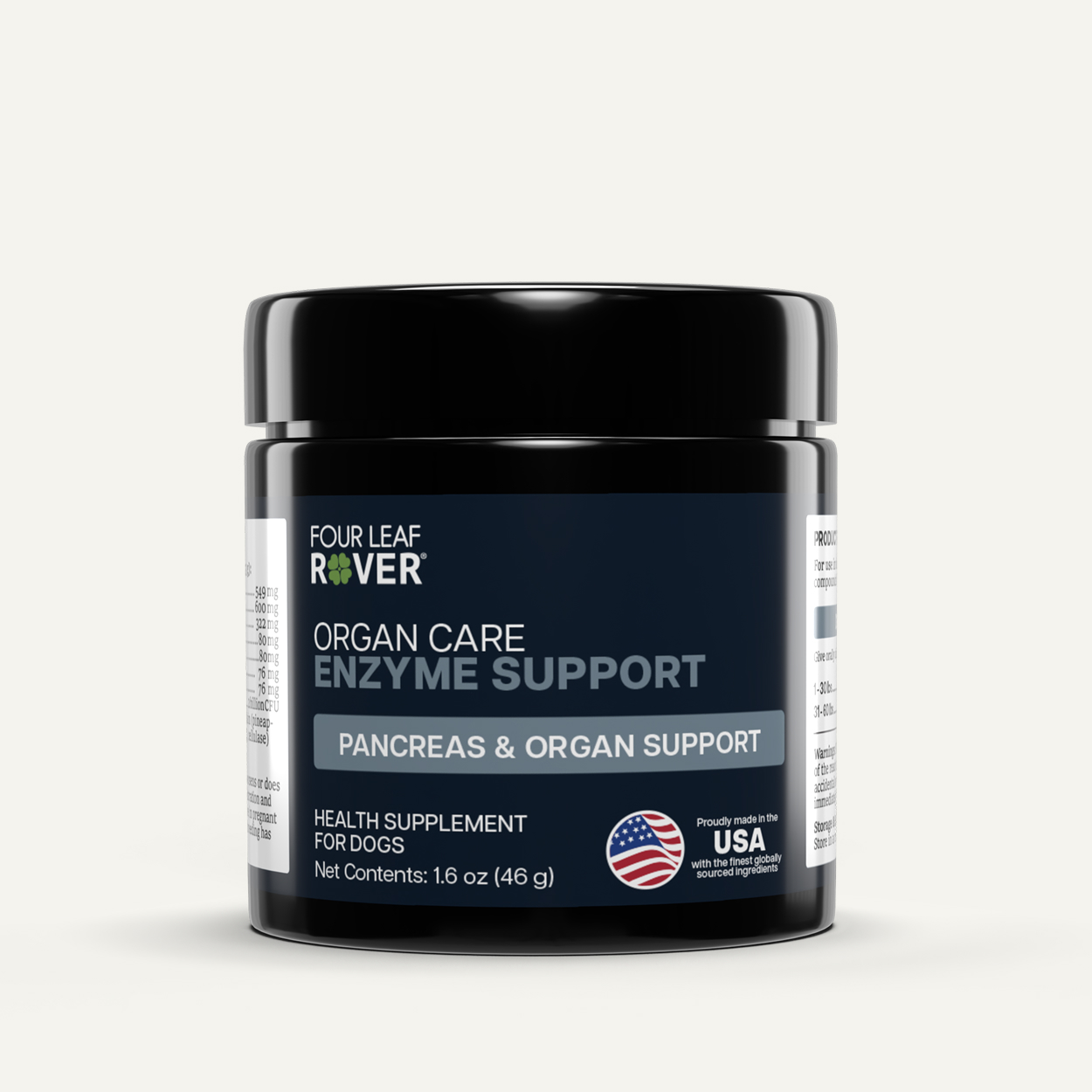
This is one reason many pet parents turn to digestive enzyme support for dogs dealing with:
acid reflux
bilious vomiting
sensitive stomachs
pancreatic stress
chronic digestive upset
Supporting Digestion Naturally
Digestive support often works best when approached gently and consistently.
Many pet parents find it helpful to:
feed smaller meals
avoid overly rich foods
support gut health
introduce digestive enzymes slowly
reduce unnecessary digestive stress
Dogs with sensitive stomachs often respond better when supplements are introduced gradually rather than starting with a full serving immediately.
Digestive Issues Often Build Slowly
One important thing to remember is that digestive problems usually do not appear overnight.
The body often shows smaller signs first:
occasional vomiting
mild reflux
gulping
stool changes
digestive sensitivity
Over time, those signs can become more noticeable if the digestive system remains stressed.
I've seen this firsthand with some of my own dogs. When I adopted them, they had been eating kibble for several years. As I transitioned them to a fresh, homemade diet, their digestive systems initially struggled to adapt. While the food itself was healthier, their bodies weren't producing enough digestive enzymes to efficiently break down and utilize those new foods.
As a result, I noticed softer stools, vomiting, and signs that their digestion wasn't functioning optimally. Once I began adding digestive enzymes to their diet, things started to improve. Their stools became firmer, they appeared more comfortable after meals, and their digestion gradually adjusted to the new diet over a period of several weeks.
That experience reinforced something I see often: sometimes the issue isn't the food itself. Sometimes the body simply needs additional support to properly digest and absorb it.
Supporting digestion properly may help the body process food more comfortably and efficiently while helping reduce stress on the gut and digestive organs.
Sometimes improving digestion is less about suppressing symptoms and more about helping the body function the way it was designed to. When digestion works well, everything downstream tends to work better too. Nutrient absorption improves, stool quality often improves, and the body can devote more energy to maintaining overall health and wellness.